
Marketing Software for Agencies: Top Picks for 2026
Marketing Software for Agencies: Top Picks for 2026
Agency tool stacks leak money when two products do the same job. These ten tools cover the four jobs every agency pays for: winning clients, running client work, reporting results, and keeping the pipeline full. The list is organised by job, not by vendor category, and the overlaps are named so you do not pay twice. Pick one tool per job before you add anything else. Prices are not quoted here. See each pricing page for the current figure.
The surprise is how full the stack already is. A 2025 Advertising Agency Report from Basis found that 51.3% of surveyed agencies used eight or more adtech or martech tools, while 40.0% were managing ten or more. That report links the growth to inefficiency and siloed workflows. A longer menu is not a working system.
Sort the names by the job they do.
- Win the work: Semrush for search research, plus a prospecting tool when the agency needs its own paying customers.
- Run the work: HighLevel or Vendasta for multi-client operations, HubSpot Marketing Hub when CRM and campaigns should share one record, and one social tool from Sendible, SocialPilot, or Sprout Social.
- Report the work: AgencyAnalytics or Whatagraph. Not both.
- Refill the pipeline: dated buying signals, a verified email, and timing you can explain. A dashboard will not do that job.
Digital budgets are why the logins multiplied. An eMarketer industry outlook reported that in 2024, technology and electronics, retail, and consumer packaged goods were expected to direct more than 80% of their advertising dollars to digital formats. That is why marketing software for agencies is a delivery requirement. It is not a reason to renew every overlapping seat.
Practical rule: If two tools both schedule posts, both build dashboards, or both store contacts, cancel one before the next renewal.
Table of Contents
- 1. SignalVan
- 2. Semrush
- 3. HubSpot Marketing Hub
- 4. HighLevel
- 5. Vendasta
- 6. AgencyAnalytics
- 7. Whatagraph
- 8. Sendible
- 9. SocialPilot
- 10. Sprout Social
- The 10 marketing software options for agencies at a glance
- How to Choose Without Buying Twice
1. SignalVan
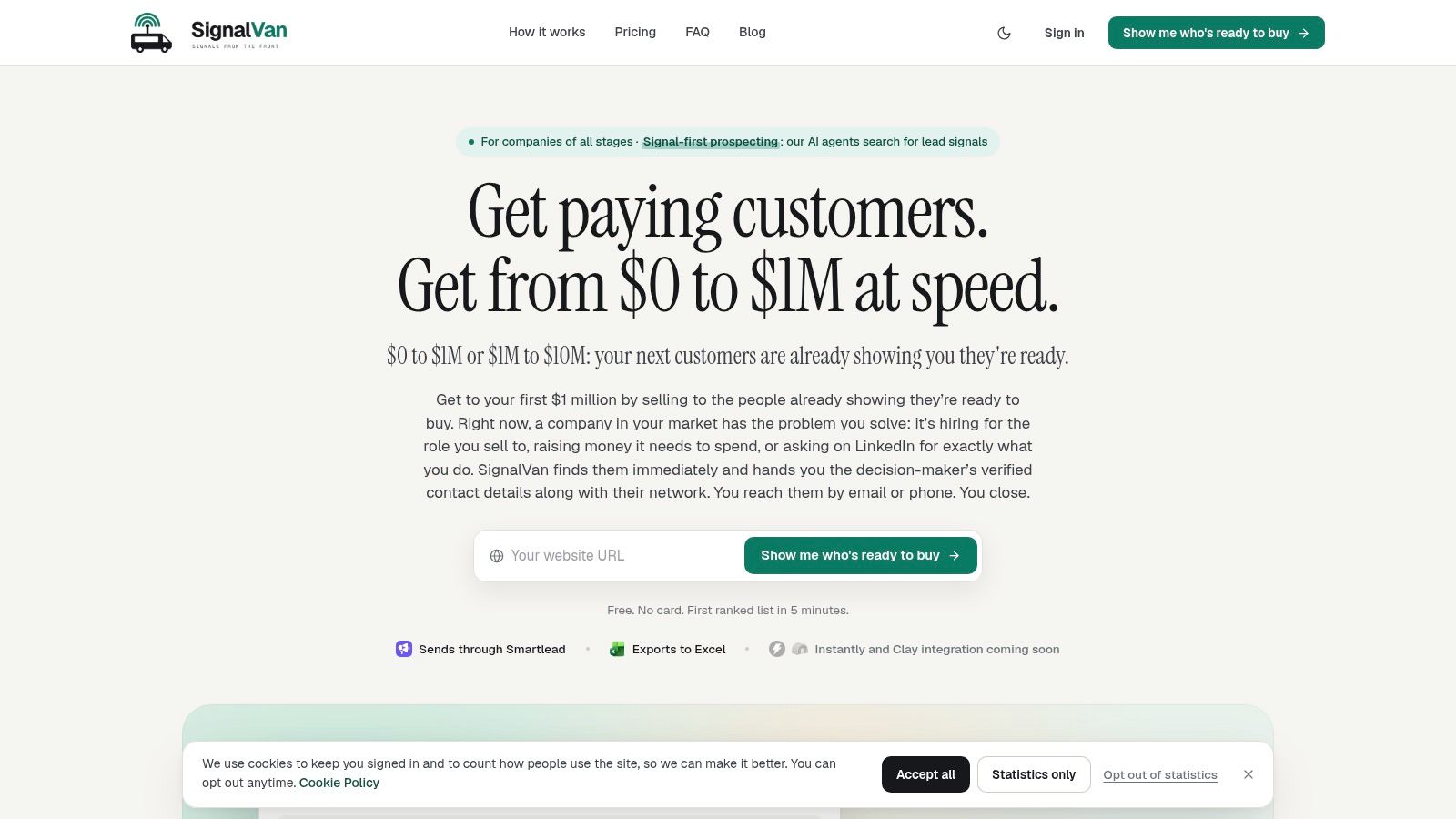
SignalVan is for founders, lead-gen agencies, and small sales teams that need paying customers, not another static file of names. You paste a website. Agents read what you sell and who is likely to buy, and you approve that reading before a search runs. There is no ICP worksheet and no onboarding call. An account can hold as many websites as you need, each with its own leads, knowledge, and campaigns.
Proof, then a contact
Discovery uses public buying signals: people asking for help, topic posts, a competitor's audience, hiring, someone new in role, company news, target accounts, posts you choose, and local directories. Company registers and public tenders are in the same set. Duplicates merge, so one person appears once with every signal that found them. Each row shows the source and the date, which is the timing you use in the first line.
For leads you pick, you get a mailbox-checked work email and a carrier-verified mobile, with a valid or up-to-date status. Catch-all, unknown, and doubtful results stay labelled. That caution protects the sending domain. Gmail's bulk sender requirements say that from February 2024, senders of 5,000 or more messages a day to Gmail accounts must authenticate mail, avoid unwanted messages, and make unsubscribing easy. Gmail advises keeping the user-reported spam rate below 0.1% and stopping it from reaching 0.3%.
UK classification is not optional either. The ICO's business-to-business marketing guidance treats companies, LLPs, and some government bodies as corporate subscribers, so the PECR consent rule for marketing email does not apply to them. Sole traders and some partnerships count as individuals and normally need consent or a qualifying soft opt-in. Every message still has to name the sender and offer a real opt-out.
You approve, then Smartlead sends
The first line is written from what the person said or did. You read it, change it, and approve it. Nothing is sent until you approve the campaign and then approve sending, and it only goes through your own Smartlead account. Smartlead connects now. Instantly, Clay, lemlist, HubSpot, Salesforce, and Pipedrive are coming soon, so do not plan those handoffs yet. Excel export is available. Leads stay private to the account and are not pooled or resold. Searches stop at the credit ceiling. Credits pay for searches, contact details, mobiles, agent chat, and reading your site and documents. A free start includes every signal, the full approval workflow, and Smartlead sync.
The shortfall is plain. Sending is Smartlead only for now, and the public site does not show named customer endorsements or awards. Judge the workflow, not the testimonials. Credits add up if you verify every row instead of the leads you would contact.
2. Semrush
Semrush is a research bench for agencies that sell SEO, content, paid search, and competitive analysis. It is not an operating system, and it will not find your next client or publish their social posts.
You build a project per client domain, then pull keyword ideas, backlinks, site audits, rank tracking, and competitor comparisons into pitch decks and monthly reviews. The agency plan raises project and keyword limits and adds API access. Optional reporting and lead-generation add-ons sit on top. That breadth is why search teams keep it. It is also why juniors get lost in menus they never needed for the brief in front of them.
What works is one place for the search questions a client asks. What does not work is treating Semrush as the reporting layer or the CRM. AgencyAnalytics or Whatagraph will still own the cross-channel deck, and a social scheduler will still own the calendar. Costs climb with limits, add-ons, and extra users. See the Semrush pricing page rather than guessing from an old quote.
If search is not a sold service, this licence is a library nobody opens.
3. HubSpot Marketing Hub
HubSpot Marketing Hub is the campaign and CRM layer for agencies that want forms, landing pages, email, and automation sitting on the same contact record as sales. It is a heavy platform for a studio that only needs a newsletter.
A 2024 Adobe study of 600 organisations found that 100% of participating marketers either use marketing-automation technology or lead a team that does. That figure is adoption, not skill. Plenty of those teams still run basic sends. HubSpot's free tools let you test capture and email before you commit. Higher editions add automation and measurement, and Professional or Enterprise pricing is a real commitment. Check how accounts, seats, and contacts are billed. See the HubSpot Marketing Hub pricing page.
Where it overlaps
Do not also pay HighLevel or Vendasta to be the system of record for the same contacts. HubSpot is the wrong tool if the job is white-label client portals or social scheduling. It also will not replace a dedicated search suite. For agencies selling account-based work, read what account-based marketing requires before you buy the top tier for features the retainers never use. A small team can outgrow the free tools and still not need the full suite.
4. HighLevel
Say you run twelve local retainers and each client wants a pipeline, a booking page, and a follow-up text. HighLevel is built for that multi-client mess. Sub-accounts keep businesses apart. Funnels, forms, calendars, email, SMS, and workflows live in one login, and the desktop app can be white-labelled. The higher plan adds tools to resell access under your brand.
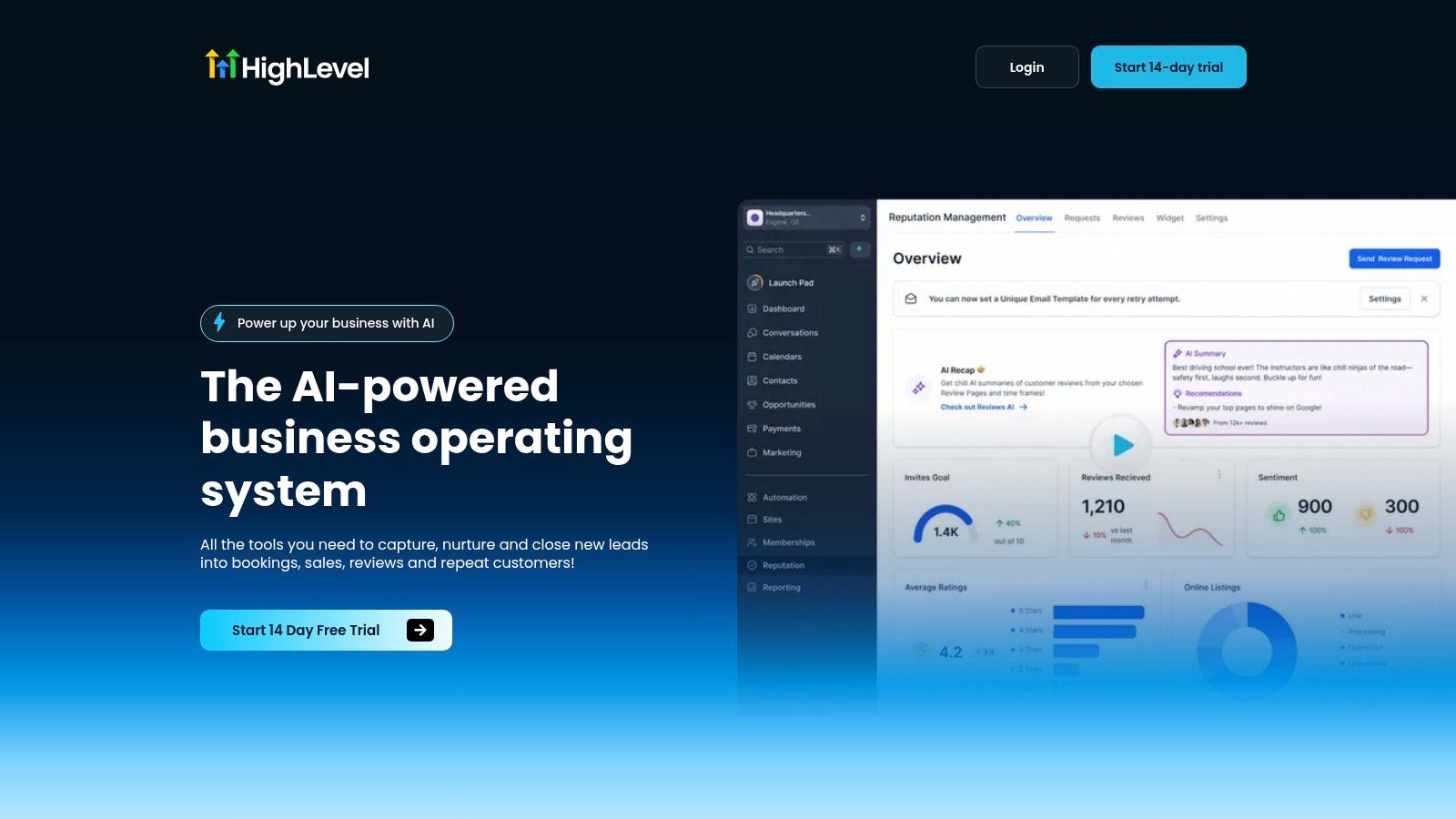
The Unlimited tier is the one agencies mean when they say sub-accounts do not cap the roster. Agency Pro is the tier that adds SaaS resale. Phone, email, and AI usage can still bill on top of the plan, so the headline seat is not the whole invoice. See the HighLevel pricing page.
Gartner reported average use of 49% of available martech capabilities in 2025, up from 33% in 2023, with planned use of 61% over the next 12 months, in a 2025 technology-marketing benchmark. A wide platform you only half configure is an admin job, not a saving. Skip HighLevel if you only need social or only need SEO. It also overlaps Vendasta and HubSpot as the CRM. Pick one home for the contact. Pipeline work is not the same job as B2B lead generation services aimed at your own new business.
5. Vendasta
Vendasta is for agencies and channel partners who package services for local businesses and resell them. It is a poor fit for a strategy shop that never fulfils listings, ads, or websites for the client.
The client portal can be white-labelled on higher plans. You buy marketing products at wholesale and resell them, and Marketing Snapshot reports give a prospect a picture of their online presence before the pitch. Higher tiers add seats and multi-location support. The Starter tier does not lock you into a long contract. Professional and Premium plans do, at one year. The monthly minimum often excludes the products you will resell, so model margin before you sign. See the Vendasta pricing page.
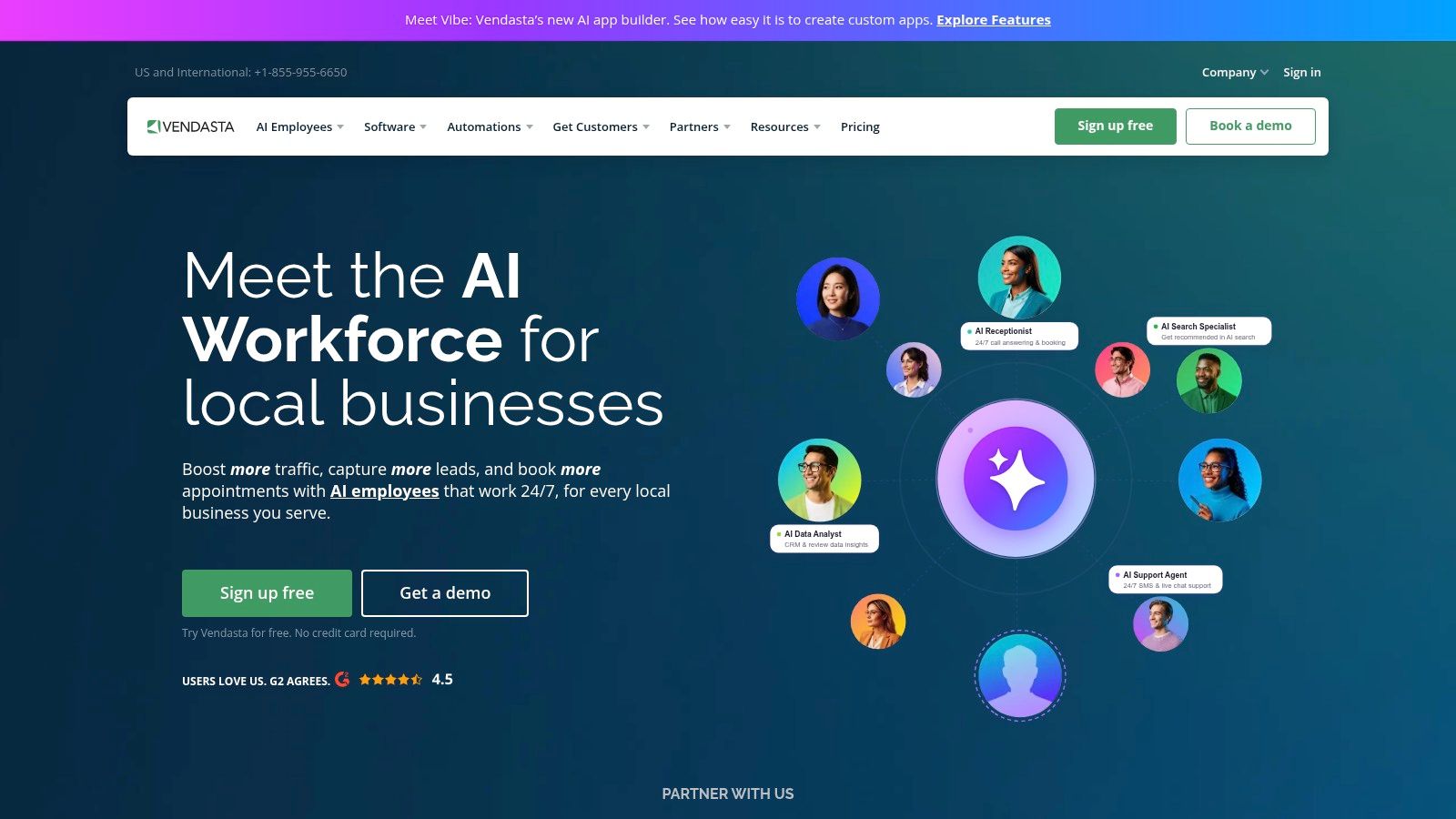
If HighLevel is already the CRM, sub-account, and funnel tool, Vendasta duplicates that operating layer. Keep Vendasta when the business is a catalogue of resold local services. Drop it when the work is creative, search strategy, or outbound for your own pipeline.
6. AgencyAnalytics
AgencyAnalytics is the reporting layer. It pulls client performance into dashboards and scheduled decks. It does not run the campaigns those decks describe.
A 2025 benchmark of more than 220 agency leaders across the United States, Canada, Australia, the United Kingdom, and New Zealand found that 70% considered client reporting critical to retention. The same benchmark found that 58% said generative AI had reduced content-creation time. Reporting is a retention habit. Drafting faster does not replace a deck the client can read.
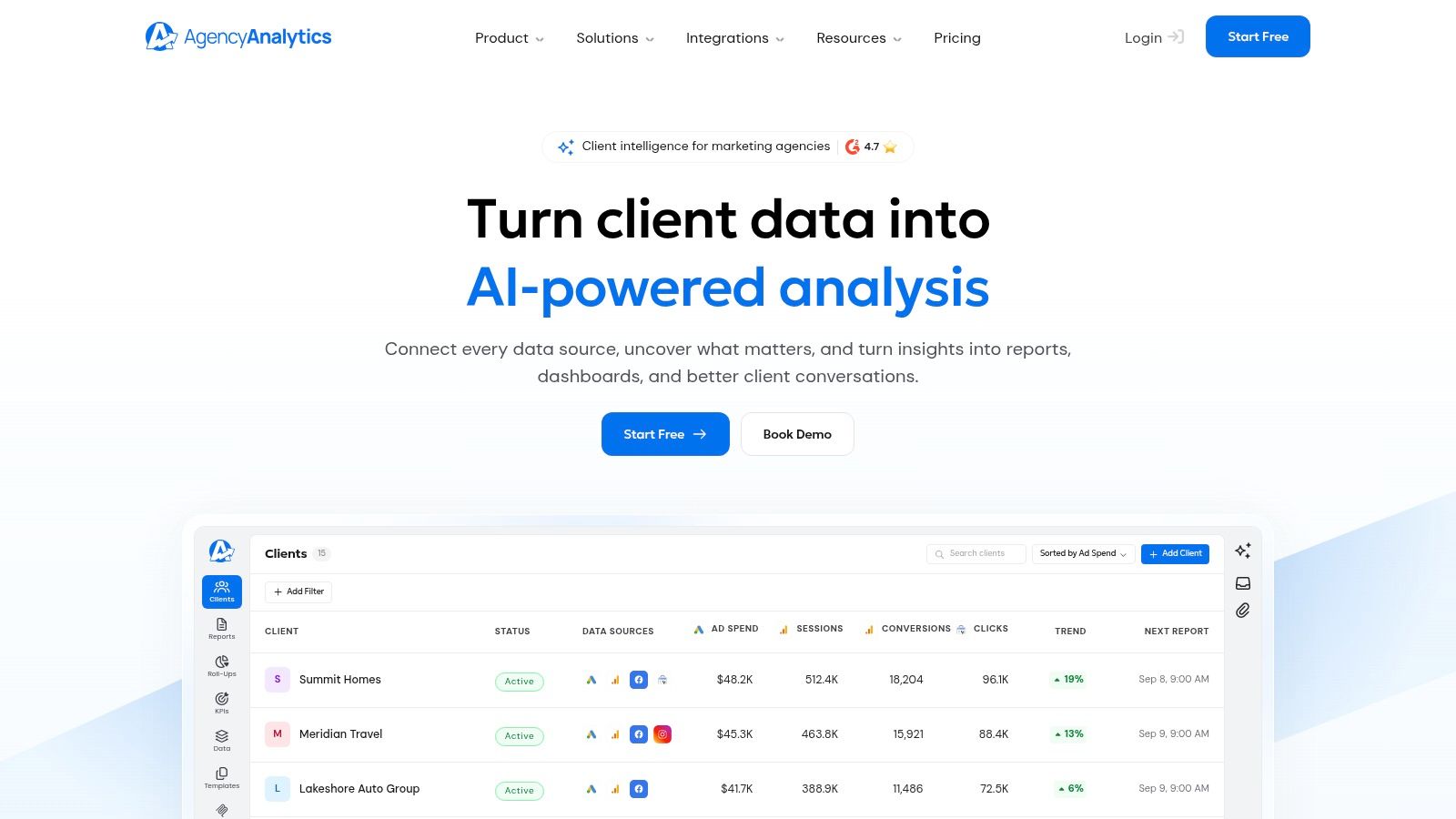
You get automated reports, a white-labelled portal, goals, alerts, anomaly detection, and AI-assisted notes, with more than 90 integrations across analytics, ads, SEO, social, and commerce. The core plan includes unlimited staff accounts and reports. A 14-day trial does not ask for a card. Billing is per client, so a growing roster increases the bill. Some connectors need paid subscriptions or awkward permissions on the client's side. See the AgencyAnalytics pricing page. Do not also subscribe to Whatagraph unless a client contract forces a second format. Semrush rankings can feed a report. They should not be rebuilt by hand in slides.
7. Whatagraph
Whatagraph collects channel data and turns it into a repeatable client report. Use it when the roster is large and every account needs the same cross-channel shape. Skip it when five clients and a spreadsheet still ship on time.
Connectors bring platforms into one view. Templates, white-label options, and automated delivery cut the Sunday export ritual. Data tools let you reshape metrics so paid, organic, and commerce sit in one story. That standardisation is the point for a group account team. It is also more machinery than a three-person shop needs.
Check connector coverage against the platforms you already promise in statements of work. Some buyers only get a number after a sales call, so see the Whatagraph pricing page and ask for the quote in writing before you migrate templates. Contract length belongs in that conversation, not in a feature grid.
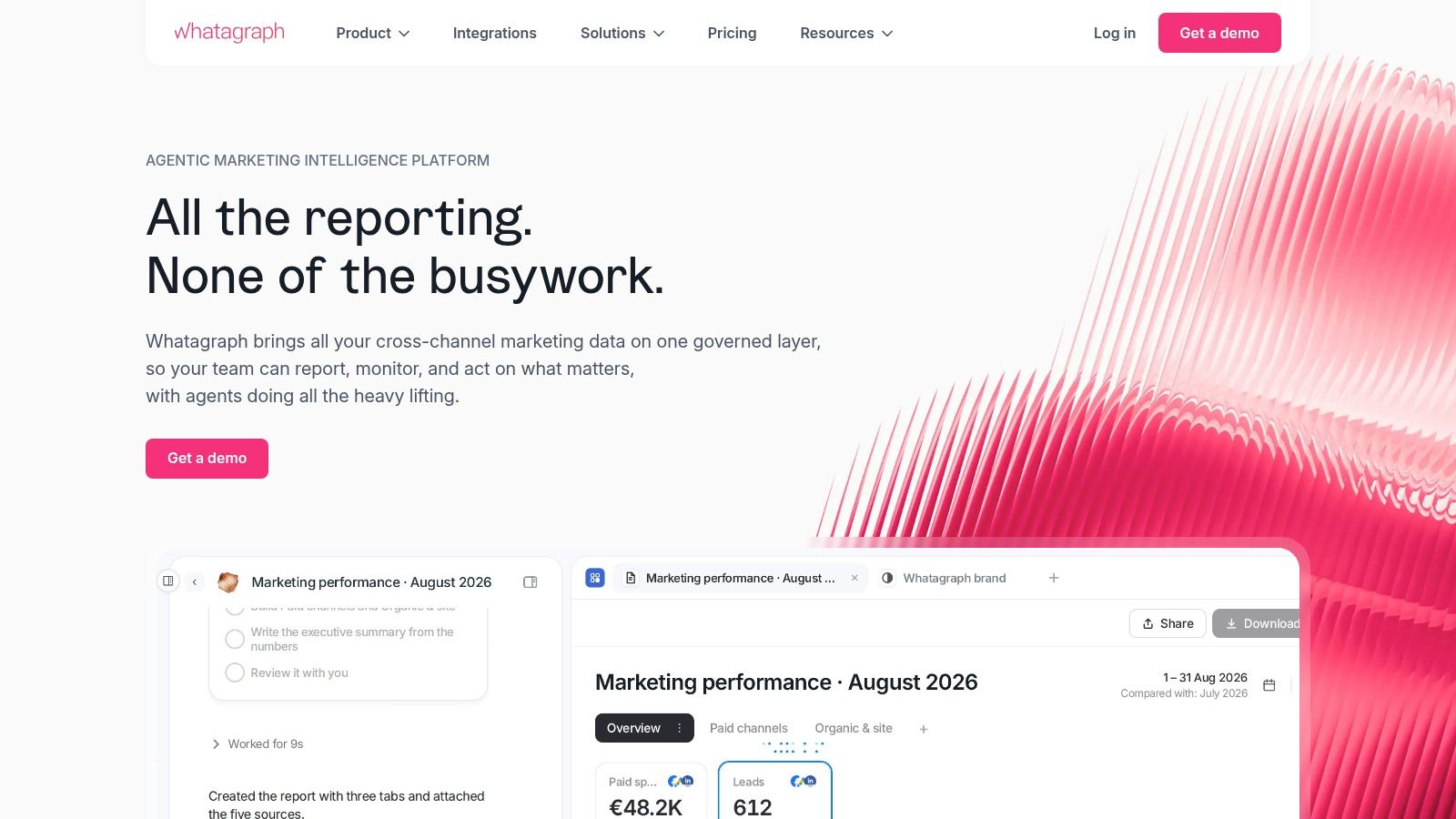
Whatagraph overlaps AgencyAnalytics almost completely as a reporting layer. It does not replace Sendible, SocialPilot, or Sprout Social, because it does not publish. It does not replace Semrush as the place you research a keyword. One reporting bill is enough.
8. Sendible
Sendible is social operations for agencies: a workspace per client, a calendar, a library, approvals, and a report. It is not a CRM and it is not where you audit a site.
Profiles, calendars, and reports stay separated, which matters once two clients share a freelancer. Bulk publishing and a content library cover the weekly load. Approval steps and a client-facing dashboard keep sign-off out of email. Networks include Instagram, Facebook, TikTok, LinkedIn, and YouTube, though inbox and publishing depth still vary by network. Unlimited users sit on the published plans. A 14-day trial starts without a card. White-labelling is an extra fee on a higher plan, and those agency plans often need a demo. See the Sendible pricing page.
If SocialPilot or Sprout Social is already scheduling the same profiles, you are paying twice for the calendar. Pair Sendible with a reporting tool only if the client portal there is the one they log into. For the approval design itself, compare it with other approval workflow tools before you add a second review product for email or design.
9. SocialPilot
SocialPilot is the social scheduler aimed at smaller agencies that still need bulk posting, client approvals, and white-label reports. It will not become your CRM, your SEO suite, or your invoice system.
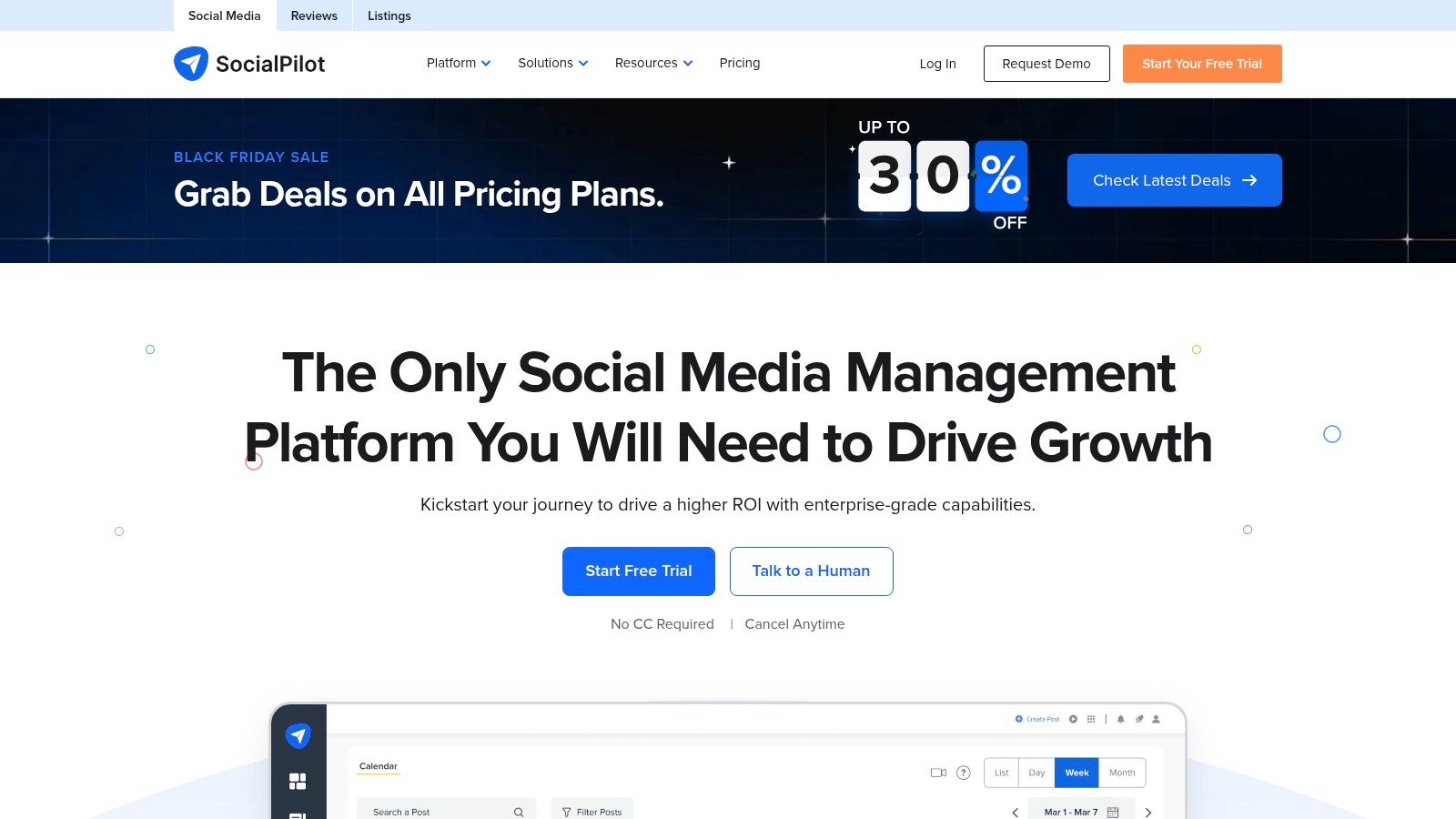
You schedule and publish across major networks, manage a content pile in bulk, and route posts through client approval. Analytics cover the usual account questions. White-label reports arrive on higher tiers, not on the entry plan. Published entry prices are easier for a small team to inspect than a custom quote, but social-account caps and user caps change by plan. Add those caps up against the roster before you assume the cheap tier survives month three. A 14-day trial does not need a card. See the SocialPilot pricing page.
The overlap to refuse
Sendible and Sprout Social do the same core job. Keep SocialPilot when cost and straightforward approvals matter more than a partner programme or deep listening. Move up only when white-label reports are in the retainer. Do not buy it to cover email nurture or pipeline stages. Those belong in HubSpot or HighLevel, not in a third social login.
10. Sprout Social
Sprout Social is the social suite for teams with a heavy inbox, a need for monitoring, and clients who expect polished analytics. Per-seat pricing punishes a wide junior bench, so count people before you count profiles.
Publishing, a shared inbox, and collaboration cover day-to-day community management. Monitoring and reporting deepen on higher plans. An Agency Partner Program adds resources aimed at agencies rather than in-house brands. Higher tiers also add workflow and productivity features that lower plans leave out. A 30-day trial is advertised. See the Sprout Social pricing page and model seats against the portfolio. A tool that feels fine at four people becomes the largest social line once every account manager needs a login.
Profile allowances and seat allowances should be read against client count, not against a demo workspace. Sprout overlaps Sendible and SocialPilot. It does not overlap Semrush, and it should not be your only report if the client also buys paid search and SEO. Pick Sprout when listening and a partner programme earn the seat. Pick a flatter scheduler when they do not.
The 10 marketing software options for agencies at a glance
The table groups the ten tools by the job each one does in an agency stack. Read the pricing column as the warning column: per-client and per-seat models scale with your roster, not your revenue.
| Item | Best for | Agency-specific features | Pricing model | Free trial or start |
|---|---|---|---|---|
| SignalVan | Founders and B2B teams seeking signal-based prospects | Signal-based lead discovery and ranked leads; outreach approved before sending through your own Smartlead account | Credits for lead searches, contact details and agent use | Free initial access, no card required |
| Semrush | Agencies focused on SEO, content, and competitive research | Agency plan with higher limits and API access; reporting and lead-generation add-ons | Plan-based; costs rise with limits, add-ons, and users | Paid plans |
| HubSpot Marketing Hub | Agencies combining marketing automation with CRM and sales data | Shared CRM data across marketing, sales, and service | Free tools and paid editions | Free tier available |
| HighLevel | Agencies managing multiple client accounts | Client sub-accounts, white-labelling, and SaaS resale on eligible plans | Plan-based, with possible usage charges | Paid plans |
| Vendasta | Agencies serving local businesses and reselling services | Client portal, white-labelling, resellable products, and multi-location support | Monthly minimum plus product costs; some plans require an annual contract | Starter tier available without a long-term contract |
| AgencyAnalytics | Agencies automating client performance reporting | Client dashboards, white-label reporting, and 90+ integrations | Per-client billing | 14-day trial, no credit card required |
| Whatagraph | Agencies consolidating cross-channel marketing data for reports | Client reporting, templates, white-label options, and automated delivery | Pricing may require a sales conversation | Demo arranged through sales |
| Sendible | Agencies scheduling and managing social media for clients | Client workspaces, approvals, dashboards, and optional white-labelling | Published plans; white-labelling costs extra on higher tiers | 14-day trial, no card required |
| SocialPilot | Small agencies needing social scheduling and collaboration | Client approvals and higher-tier white-label reports | Published plan pricing with tier-dependent limits | 14-day trial, no credit card required |
| Sprout Social | Agencies managing and analysing substantial social activity | Agency Partner Program and team workflows | Per-seat pricing | 30-day free trial advertised |
Three rows cover social scheduling and two cover client reporting, so shortlist one tool per job before comparing prices. Trial terms shift with promotions, so confirm the current offer on each vendor's pricing page before committing.
How to Choose Without Buying Twice
Buy in this order, and stop when the job is covered.
- Reporting first. Choose AgencyAnalytics or Whatagraph. Per-client billing grows with the roster, so price the client you expect next year, not the client you have today.
- Social execution second. Choose Sendible, SocialPilot, or Sprout Social. One calendar, one approval path, one set of profile caps.
- The operating or CRM layer third. Choose HighLevel, Vendasta, or HubSpot Marketing Hub. One contact record. White-label and resale only if you sell them.
- Search research fourth. Add Semrush only if SEO, content, or paid search is a billed service.
- Your own pipeline last, and do not skip it. Client tools do not fill the agency's pipeline.
Two failure modes show up on renewal day. Overlapping subscriptions, where HighLevel and HubSpot both store leads, or Sendible and Sprout both schedule the same Instagram profile. And per-client or per-seat maths, where a cheap-looking report or social plan doubles because every new retainer adds a unit. List every login, name the job, and cut the second tool that does it.
Trust is the other bill. A GlobeNewswire release on agency sentiment reported that 90% of professionals believe AI threatens their primary revenue streams, 54% report more strained client relationships, and 40% identify siloed or disconnected systems as a major challenge. Automation without an approval gate makes that strain worse. Drafting is not the same as dispatch.
Apply the same rule to winning clients. SignalVan's signal-first prospecting starts when you paste your website. You get ranked leads with the source and date as proof, then the decision-maker's verified email for the leads you pick. You approve every message, and it goes out only through your own Smartlead account. That is how you chase timing without handing sending to a tool you cannot stop. Paste your website at signalvan.com to see who's ready to buy this week.
Agencies lose margin when prospecting sits in a spreadsheet while the rest of the stack is fully licensed. SignalVan ranks companies from public buying signals, checks the decision-maker, and drafts the first message for you to approve before it leaves through your own Smartlead account. Paste your site, keep one governed path from proof to send, and stop paying a second tool to guess who is ready.
Keep reading

Excel Export Data: How to Keep Your Formatting Intact
Excel Export Data: How to Keep Your Formatting Intact
Lead Generation Software: 10 Tools That Find Real Buyers
Lead Generation Software: 10 Tools That Find Real Buyers
10 Databases for Sales Compared: Coverage and Data Quality
10 Databases for Sales Compared: Coverage and Data Quality
Start with your website.
See your first leads, with the reason each one is there.